
MARESIS: Measuring humpback whale health in Brazil
Humpback whales migrate thousands of kilometers each year, moving between high-latitude feeding grounds and low-latitude breeding areas. Along the way, they experience changing ocean conditions, shifting prey availability, and increasing exposure to human activity. Understanding how individual whales respond to these conditions - and what “healthy” looks like for a free-swimming whale - is one of the major challenges in marine mammal conservation science.
FaunaLabs supports this work through the MARESIS project, starting with humpbacks in the Abrolhos Bank region in the State of Bahia, Brazil. This region is one of the most important breeding areas for South Atlantic humpback whales, and it offers a unique setting for studying whales during a critical life stage.
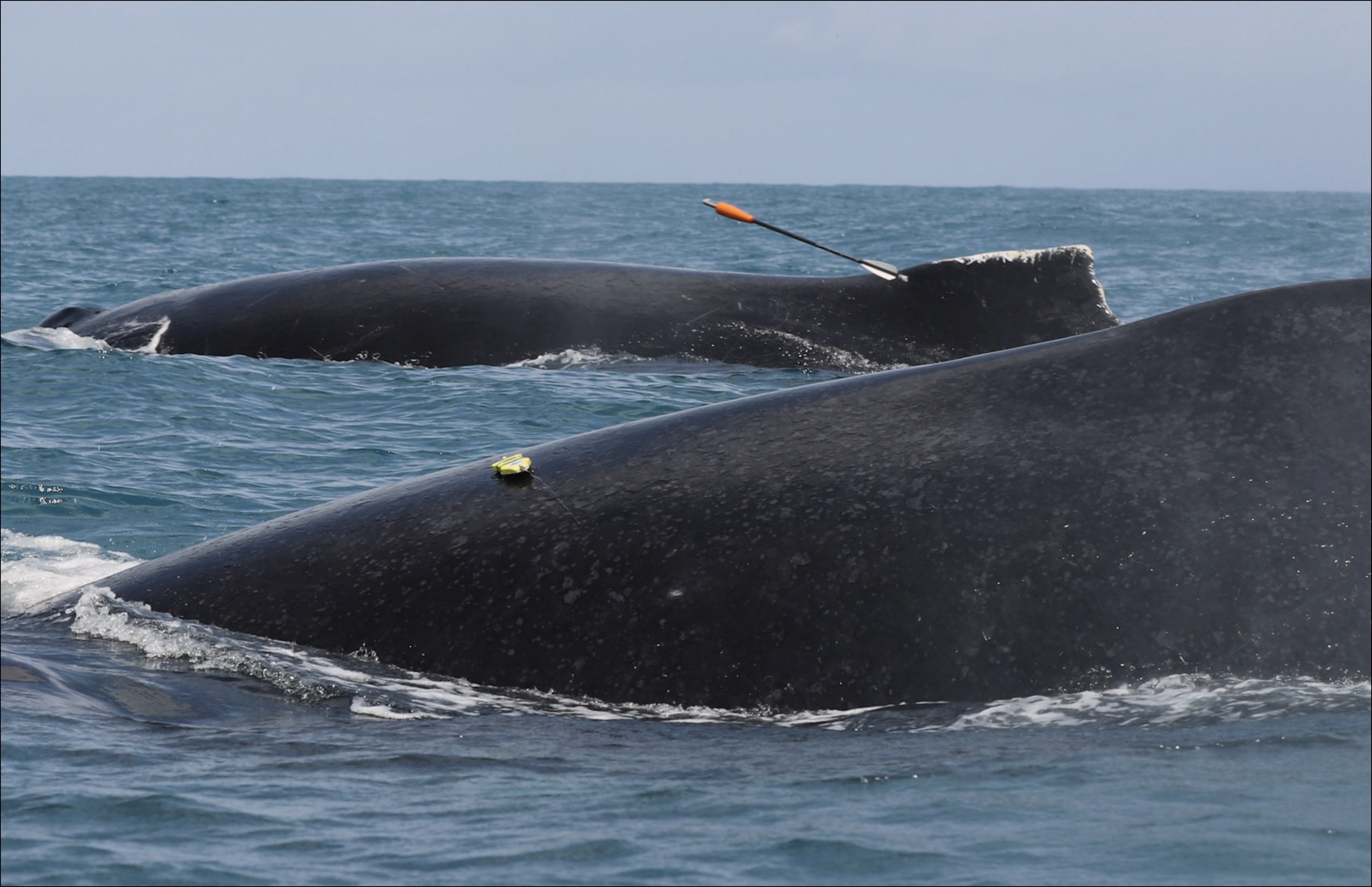
Why Abrolhos Bank matters
The Abrolhos Bank is a broad, shallow continental shelf region off Bahia, known for its biological richness and for the seasonal presence of humpback whales during breeding and calving. Studying whales here provides insight into behavior, habitat use, and the physical condition of individuals during a period when energetic demands can be high.
Because breeding areas are often closer to coastal human activity than remote feeding grounds, they can also be places where whales encounter stressors such as vessel traffic and other anthropogenic influences - including underwater sound.
The MARESIS focus: individual health, baseline, and response
A central goal of MARESIS is to examine individual whale health:
- Establishing baseline measures of health-relevant signals and behavior in the breeding area
- Understanding how individuals may respond when exposed to anthropogenic acoustic disturbance
This approach matters because conservation decisions are often made using population-level measures (counts, trends, distribution). Those are essential - but they don’t always explain how or why individuals are affected. Health- and behavior-focused measurements can help bridge that gap, providing evidence that can inform long-term management decisions.
Partnership and collaboration
This work is conducted in partnership with the Instituto Baleia Jubarte, with additional collaborators who are Brazilian whale researchers from multiple institutes and universities.
The project is sponsored by Petrobras CENPES.
FaunaLabs is grateful to be part of a collaborative effort that combines field experience, regional knowledge, and technology development to advance marine mammal science in Brazil.
Where tagging technology fits in
Many of the most important aspects of whale life happen underwater and can’t be observed from the surface. That’s where whale tagging technology becomes essential.
Modern whale tags can record synchronized sensor data that help interpret:
- how whales move and behave underwater
- how deep they dive and how long they stay submerged
- what soundscape they experience
- how behavior and environment relate to health-relevant signals
This is often described as marine mammal bio-logging - logging biological and environmental data from free-swimming animals.
FaunaTag: non-invasive suction-cup tagging
FaunaLabs’ core platform, FaunaTag, is designed around a foundational principle: always non-invasive. FaunaTag temporarily attaches using suction cups and releases naturally after a period of time.
FaunaTag integrates synchronized sensing that can include:
- IMU (accelerometer, gyroscope, magnetometer) for movement and fine-scale behavior
- Hydrophone recordings for acoustic context
- Depth and temperature sensors for environmental context
- Bio-optical sensing approaches inspired by biomedical measurement technologies (including fNIRS-style designs), adapted for marine mammal field use
The goal is not “more sensors for their own sake,” but a clearer interpretation of what whales are doing and experiencing - and how behavior and environment connect to indicators of condition.
Baseline first: building a reference for health and behavior
A key challenge in studying whale health is that “normal” varies:
- across individuals
- across seasons
- across life stages
- across environments
That’s why baseline measurements matter. When we can characterize patterns of behavior and physiology-related signals under typical conditions, we’re better positioned to interpret deviations - and to ask more precise questions about potential stressors.
Why acoustics matter
Underwater sound is a defining feature of the ocean environment. Whales communicate acoustically, and many species rely on sound for social behavior and navigation.
Anthropogenic sound sources can include vessel traffic and industrial activity. Understanding how whales behave and respond in acoustic contexts is part of building an evidence base for conservation decisions.
By combining movement, depth, and hydrophone data, bio-logging tags can help interpret:
- what sound conditions whales experience
- what they do during those exposures
- whether behavior shifts in detectable ways
What success looks like
For FaunaLabs, success in MARESIS is not simply “tag deployed.” It looks like:
- high-quality, synchronized datasets that help answer real scientific questions
- continued improvement of non-invasive tagging technology under field conditions
- collaboration that strengthens regional research capacity and long-term conservation science
- insights that contribute to protecting whales and the ocean habitats they depend on
Follow along
As the project continues, we’ll share updates from the field and the lab - including what we’re learning about humpback whale health and how non-invasive whale tagging technology can support conservation.